"Adjectives in English absolutely have to be in this order: opinion-size-age-shape-colour-origin-material-purpose Noun.
So you can have a lovely little old rectangular green French silver whittling knife. But if you mess with that word order in the slightest you’ll sound like a maniac.
It’s an odd thing that every English speaker uses that list, but almost none of us could write it out. And as size comes before colour, green great dragons can’t exist."
Showing posts with label misc. Show all posts
Showing posts with label misc. Show all posts


Bonny Scotland

This is the picture most tourists have of the Scottish countryside. They find it beautiful, but that is because they do not understand what they are seeing.
What they are seeing is a devastated industrial landscape. The bare hills and glens of Scotland are a product of the sheep farming and the sporting industries. Approximately 98% of the natural Scottish forests have been cleared. Neolithic farmers started the tree felling and it has continued to the present day. The bare green hills are now only good for sheep, deer and grouse. There are too many deer in Scotland and deer are very good at preventing forests from regenerating. If neither the sheep farming or shooting industries existed the countryside would look very different.
Sheep farming is not economically viable. Without subsidies farmers would be losing money on every animal they raised. Sporting estates are not much better. When I drive up to Edinburgh I pass through mile after mile of this industrial landscape. A landscape that is full of sheep farms that provide only a subsistence living to their owners.
What needs to happen is for the Scottish Parliament to introduce a scheme to persuade landowners to move away from sheep and grouse farming, and to start reforestation. To start replanting the Great Caledonian Forest that once covered Scotland. Once the forest started to regenerate we could start looking at reintroducing some of the species that have been lost.
A small step towards making this happen is being taken around Loch Katrine with a scheme to plant thousands of acres with broadleaf trees, such as oak, rowan, alder, willow, ash, and aspen. There is so must wasted land in Scotland that we could create a forest covering thousands of square miles. This would not only be a recreational asset for Scots, but also a tourist attraction. It would also do something towards alleviating global warming.

Iron Mountain hideaway
From this article on the Iron Mountain storage facility.
'In the sixties and early seventies, Mesick said, people sometimes slept in the mine: it contained fallout shelters, built and maintained by Iron Mountain for executives from Exxon, Shell, and other big companies.
One especially elaborate shelter, he said, had sixty-five hotel rooms, each with a private bath, and a large cafeteria with a commercial kitchen; in the mid-century-modern bedrooms, curtains obscured the concrete. According to Mesick, in the event of nuclear war, some executives, along with their families, would have been evacuated by helicopter from New York City. “They’d hired local folks to tend to them, to cook for them, to clean for them,” Mesick told me. “Their idea was to wait out the storm while the debris and radioactivity were going on overhead—then they were going to come out and sell oil to everyone who was left.”
Every now and then, Mesick recalled, the executives would run a “live exercise”—essentially, they’d come and hang out for the weekend.'
It's good to know that the really important people would have been safe.
'In the sixties and early seventies, Mesick said, people sometimes slept in the mine: it contained fallout shelters, built and maintained by Iron Mountain for executives from Exxon, Shell, and other big companies.
One especially elaborate shelter, he said, had sixty-five hotel rooms, each with a private bath, and a large cafeteria with a commercial kitchen; in the mid-century-modern bedrooms, curtains obscured the concrete. According to Mesick, in the event of nuclear war, some executives, along with their families, would have been evacuated by helicopter from New York City. “They’d hired local folks to tend to them, to cook for them, to clean for them,” Mesick told me. “Their idea was to wait out the storm while the debris and radioactivity were going on overhead—then they were going to come out and sell oil to everyone who was left.”
Every now and then, Mesick recalled, the executives would run a “live exercise”—essentially, they’d come and hang out for the weekend.'
It's good to know that the really important people would have been safe.
Death in the Long Grass

You may have seen the 1996 film The Ghost and the Darkness with Michael Douglas and Val Kilmer. The film was based on Lieut.-Col. J. H. Patterson’s book 'The Man-Eaters of Tsavo'. The man-eaters were two lions who killed 135 construction workers on the Uganda Railway in 1898 before they were shot by Patterson. The film is a typical Hollywood product but the book is worth reading. It is now out of copyright but I found a copy on the internet. Patterson goes about slaughtering the wildlife, as they did then, but the wildlife has several very good attempts at slaughtering Patterson.
Reading it reminded me of Peter Hathaway Capstick’s 'Death in the Long Grass'. This 1977 book is about Capstick’s life as a big game hunter in Africa. It is an excellent read. The book is still in print and can be obtained from Amazon. I managed to obtain my copy from a charity shop for 70p.
 Capstick describes several encounters with lions and mentions that packs of man-eating lions were common, especially near the Great Rift in Central Africa. The Ubena man-eaters had been operating for ten years before they were all killed. A game office called Rushby wiped out the Njombe man-eaters, a pride of fifteen lions, which were thought to have killed 1500 natives and colonists. Rushby described the hunt in 'No More the Tusker'. Unfortunately the book is now out of print.
A paper [The Science of ‘Man-Eating*’ Among Lions Panthera leo With a Reconstruction of the Natural History of the ‘Man-Eaters of Tsavo’]
by Julian C. Kerbis Peterhans and Thomas Patrick Gnoske refers to Rushby and the Njombe pack.

A fully grown lion is 6-8 ft long [head and body] and about 4 ft tall. The natives would have stood little chance against such creatures. Video.
Capstick has some wonderful anecdotes about lions and other African predators. Its clear from what he writes just how deadly these cute Wildlife Special creatures are in their own environment. He thought that crocodiles alone were killing ten Africans a day at the time he wrote, usually women who had gone down to a river bank to collect water. Also, how little chance anybody would stand against them unless armed with a powerful rifle. Capstick was experienced and well armed but he acquired 300 stitches, three severed tendons and a cut femoral artery during his career.
From another source
"Zambia’s lions had a far worse reputation during the bygone colonial era than did the Tsavo lions. In the far north on Lake Mweru, there was an old boma (government outpost) called Chiengi, about 160kms from Mporokoso, and it was in this area that some man-eaters periodically set up a reign of terror, and they were never beaten. One particular lion, which regularly killed natives in the vicinity of Chiengi Boma, became known as Chiengi Chali. During 1909 alone, he killed ninety locals. For a long time, attempts to bring him to book failed, on one occasion he actually leapt into the courtyard of Sealy the District Officer’s house, but escaped before Sealy could get in a shot.
Efforts to bring Chiengi Chali’s reign of terror to an end were stepped up, with fires being lit and guards posted, but it was to no avail, he just went on killing. Chiengi Chali was not intimidated by very much and broke through the thatched roofs of village huts or forced his way into already lit up doorways. For a long time, he managed to avoid trap guns, yet stole the bait attached to them."
Read more here.
Jim Corbett wrote a series of books about hunting man-eating tigers [Man-Eaters of Kumaon] and leopards [The Man-Eating Leopard of Rudraprayag] in India. One tiger had killed over 400 people. A woman was taken from her hut by a tiger. The tiger entered via a small window, took the woman from amongst her family as they slept on the floor, and left with her body through the same small window. A flower pot in the window was still in place when the family woke the next morning.
Self addressed - Mr Bray's experiments with the post
At the end of the 19th century the young W R Bray started a series of experiments with the UK postal system. These included having his mother crochet an envelope and posting himself - three times. Later he became the Autograph King.
15 Sep, 2010. Englishman Who Posted Himself and Other Curious Objects, the First Edition edition., New York: Princeton Architectural Press.
The book is well written and has lots of illustrations of Bray's experiments.
I heard about Bray from a Futility Closet podcast.
There is also a Bray website.
More recently Harriet Russel carried out a similar series of experiments.

Why is there so much rubbish on the internet?
When people ask this question they are usually asking why so many World Wide Web pages are of such poor quality. It’s a good question. There are an awful lot of pages which are biased, inaccurate, incomplete, opinionated, misleading and badly written.
There are two reasons for this situation; one is reviewing and the other is charging.
In traditional publishing the established way of controlling quality is the reviewing process. Before anything is published in a journal, newspaper or book it will have been reviewed by at least one person, and maybe two or three. If an author wants their work to be published they have to take account of the reviewer’s comments. The process is not perfect, but it works pretty well.
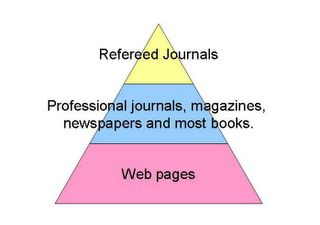 There is a quality hierarchy in publishing. At the top are the refereed journals, mainly written by academics. The content of these will have been reviewed by an editor and by between one and three referees. The referees should be people who are known to be knowledgeable about the subject of the article being reviewed.
At the next level down are professional journals, magazines, newspapers and most books. The content of these will have been reviewed by a editor. The quality threshold is less here because the editor may not know anything about the subject of the article. However, they will be able to correct bad writing.
At the bottom of the pyramid are web pages. No permission is required to publish and that means that usually only the author has looked at a web page [including weblogs ] before it appears on the web. Of course there are advantages in imprimatur free publishing, but the cost is often quality.
The second factor that affects the quality of web pages is the lack of a charging mechanism on the internet. If authors are paid for their work they have a powerful incentive to produce good work and more of it. The problem is that is no mechanism on the internet that would allow an author to charge a few pence for a look at a well researched and written web page. Other online networks did have such mechanisms. Minitel had its kiosk system. The proprietary networks, such as Compuserve, had ways of charging for content. The internet, because of its academic history and open source nature, does not have such a mechanism. The result is that writers are dependent upon advertising, egotism or altruism for their reward.
Of course, there is a part of the internet where pages are of high quality, the reviewing mechanism works and people get paid for their work. This is the so called Deep Web where publications are behind subscription walls in databases such as Dialog, LexisNexis, IngentaConnect, WofK, ABI/Inform and lots more. Most internet users do not realise these exist because the pages in these systems never appear in Google searches. Google only searches the poor quality Surface Web. It is only relatively recently that Google has started to open a window into the Deep Web with its Google Scholar search engine.
Can we do anything to improve the quality of pages in the Surface Web? Perhaps by trying to introduce a reviewing system for Surface Web pages? I do not think we should try. Free publishing is worth preserving.
Creating a micropayments system for the Surface Web would reduce the dependence on altruism and advertising and give authors an incentive to do quality work. Perhaps it would be possible to link a payment mechanism with RSS feeds. The problem would be coming up with a system that people would accept and use. We have all got too used to getting stuff for free on the internet.
There are two reasons for this situation; one is reviewing and the other is charging.
In traditional publishing the established way of controlling quality is the reviewing process. Before anything is published in a journal, newspaper or book it will have been reviewed by at least one person, and maybe two or three. If an author wants their work to be published they have to take account of the reviewer’s comments. The process is not perfect, but it works pretty well.
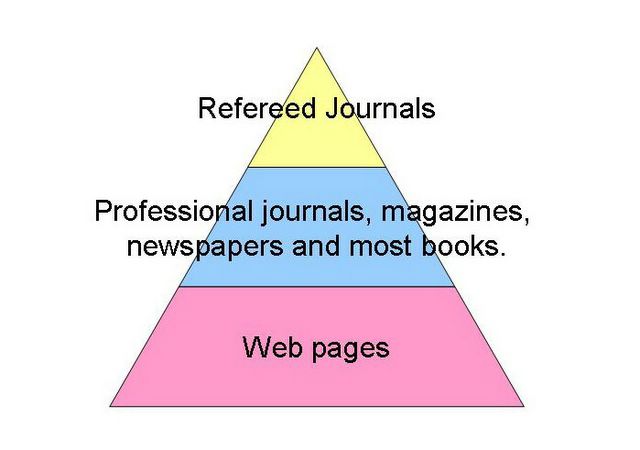 There is a quality hierarchy in publishing. At the top are the refereed journals, mainly written by academics. The content of these will have been reviewed by an editor and by between one and three referees. The referees should be people who are known to be knowledgeable about the subject of the article being reviewed.
 At the next level down are professional journals, magazines, newspapers and most books. The content of these will have been reviewed by a editor. The quality threshold is less here because the editor may not know anything about the subject of the article. However, they will be able to correct bad writing.
At the bottom of the pyramid are web pages. No permission is required to publish and that means that usually only the author has looked at a web page [including weblogs ] before it appears on the web. Of course there are advantages in imprimatur free publishing, but the cost is often quality.
The second factor that affects the quality of web pages is the lack of a charging mechanism on the internet. If authors are paid for their work they have a powerful incentive to produce good work and more of it. The problem is that is no mechanism on the internet that would allow an author to charge a few pence for a look at a well researched and written web page. Other online networks did have such mechanisms. Minitel had its kiosk system. The proprietary networks, such as Compuserve, had ways of charging for content. The internet, because of its academic history and open source nature, does not have such a mechanism. The result is that writers are dependent upon advertising, egotism or altruism for their reward.
Of course, there is a part of the internet where pages are of high quality, the reviewing mechanism works and people get paid for their work. This is the so called Deep Web where publications are behind subscription walls in databases such as Dialog, LexisNexis, IngentaConnect, WofK, ABI/Inform and lots more. Most internet users do not realise these exist because the pages in these systems never appear in Google searches. Google only searches the poor quality Surface Web. It is only relatively recently that Google has started to open a window into the Deep Web with its Google Scholar search engine.
Can we do anything to improve the quality of pages in the Surface Web? Perhaps by trying to introduce a reviewing system for Surface Web pages? I do not think we should try. Free publishing is worth preserving.
Creating a micropayments system for the Surface Web would reduce the dependence on altruism and advertising and give authors an incentive to do quality work. Perhaps it would be possible to link a payment mechanism with RSS feeds. The problem would be coming up with a system that people would accept and use. We have all got too used to getting stuff for free on the internet.
Bad service at Amazon
This is from Cory Doctrow's latest Guardian column. It is about Amazon's new MP3 policy.
"A good example of this is Amazon's MP3 store. Until recently, it worked beautifully. I'd pay a reasonable price for my music, and Amazon would let me download it to my computer with as little fuss as possible. Recently, that changed. Amazon wants to promote its cloud drive services, so now it requires that you lock yourself into an Amazon-proprietary downloader to get your MP3s.
The Amazon MP3 store started life with a lot of rhetoric about liberation (they made t-shirts that trumpeted "DRM: Don't Restrict Me!") that contrasted their offering with the locked-in world of the iTunes Store. Now that Amazon has won enough marketshare in the MP3 world, it's using that position to try and gain ground in the world of cloud computing – at the expense of its customers.
Lucky for me, MP3 is an open format, so MP3 investments fail well. The fact that I bought hundreds of pounds' worth of music from Amazon doesn't stop me from taking my business elsewhere now that they've decided to treat me as a strategic asset instead of a customer."
I have just had the same problem with MP3 downloads from Amazon. I used to be able to easily download my MP3 purchases. Now I cannot without installing their cloud app. Since it is perfectly possible to download files using the FTP built into all browsers customers have to ask why Amazon has made the cloud app a compulsory download. Those who are suspicious might suspect that Amazon has an ulterior motive and the the app contains DRM [or spyware that will gather usage data from customers].
All Amazon has to do to dispel such suspicions is to make the app an option and issue a statement that it is not transmitting any private data back to Amazon if it is installed.
Amazon is behaving badly. I will not be using their MP3 store again. Also, since big companies rarely get the message unless they start losing money, I have started buying elsewhere.
Amazon's behaviour is surprising. Usually they are very careful of their reputation for good customer service. I am guessing that this has been done by some low level wannabe.
Alternatives to Amazon
I have started buying books from Aphrohead Books and Speedyhen. Both companies sell through Play.com.
They provided free P and P, quick delivery and lower prices than Amazon.
Update
I have now purchased five books from companies selling through Play.com. In every case at prices lower than Amazon's and with free delivery.
"A good example of this is Amazon's MP3 store. Until recently, it worked beautifully. I'd pay a reasonable price for my music, and Amazon would let me download it to my computer with as little fuss as possible. Recently, that changed. Amazon wants to promote its cloud drive services, so now it requires that you lock yourself into an Amazon-proprietary downloader to get your MP3s.
The Amazon MP3 store started life with a lot of rhetoric about liberation (they made t-shirts that trumpeted "DRM: Don't Restrict Me!") that contrasted their offering with the locked-in world of the iTunes Store. Now that Amazon has won enough marketshare in the MP3 world, it's using that position to try and gain ground in the world of cloud computing – at the expense of its customers.
Lucky for me, MP3 is an open format, so MP3 investments fail well. The fact that I bought hundreds of pounds' worth of music from Amazon doesn't stop me from taking my business elsewhere now that they've decided to treat me as a strategic asset instead of a customer."
I have just had the same problem with MP3 downloads from Amazon. I used to be able to easily download my MP3 purchases. Now I cannot without installing their cloud app. Since it is perfectly possible to download files using the FTP built into all browsers customers have to ask why Amazon has made the cloud app a compulsory download. Those who are suspicious might suspect that Amazon has an ulterior motive and the the app contains DRM [or spyware that will gather usage data from customers].
All Amazon has to do to dispel such suspicions is to make the app an option and issue a statement that it is not transmitting any private data back to Amazon if it is installed.
Amazon is behaving badly. I will not be using their MP3 store again. Also, since big companies rarely get the message unless they start losing money, I have started buying elsewhere.
Amazon's behaviour is surprising. Usually they are very careful of their reputation for good customer service. I am guessing that this has been done by some low level wannabe.
Alternatives to Amazon
I have started buying books from Aphrohead Books and Speedyhen. Both companies sell through Play.com.
They provided free P and P, quick delivery and lower prices than Amazon.
Update
I have now purchased five books from companies selling through Play.com. In every case at prices lower than Amazon's and with free delivery.
Going along with the crowd
The Duke of Norfolk: Oh confound all this. I'm not a scholar, I don't know whether the marriage was lawful or not but dammit, Thomas, look at these names! Why can't you do as I did and come with us, for fellowship!
Sir Thomas More: And when we die, and you are sent to heaven for doing your conscience, and I am sent to hell for not doing mine, will you come with me, for fellowship?
Sir Thomas More: And when we die, and you are sent to heaven for doing your conscience, and I am sent to hell for not doing mine, will you come with me, for fellowship?
The quotation is from Robert Bolt's "A Man for All Seasons". Sir Thomas More, the 16th-century Chancellor of England, refused to endorse King Henry VIII's wish to divorce his aging wife Catherine of Aragon, who could not bear him a son, so that he could marry Anne Boleyn, the sister of his former mistress. Henry VIII had him killed for his refusal.
Plastic bags
From the BBC 'Costing the Earth' podcast.
UK plastic consumption is 120kg per person per year.
Only 8% of that is domestic consumption.
The rest is used by industry. Some in moving goods from factory to store. Some in the building industry [i.e. water, gas and sewage pipes in and outside homes and other premises].
Of the 9.6kg of domestic consumption about 9% [0.86kg] is plastic bags [shopping bags, refuse sacks etc.].
So plastic shopping bags account for somewhat less than 0.7% of the average persons consumption of plastic.
Plastic is produced from oil. Plastic production accounts for 8% of global oil use.
British politicians are doing their bit to cut oil consumption and reduce plastic waste by requiring supermarkets to charge for each plastic bag they supply.
Hallelujah, we are saved.
UK plastic consumption is 120kg per person per year.
Only 8% of that is domestic consumption.
The rest is used by industry. Some in moving goods from factory to store. Some in the building industry [i.e. water, gas and sewage pipes in and outside homes and other premises].
Of the 9.6kg of domestic consumption about 9% [0.86kg] is plastic bags [shopping bags, refuse sacks etc.].
So plastic shopping bags account for somewhat less than 0.7% of the average persons consumption of plastic.
Plastic is produced from oil. Plastic production accounts for 8% of global oil use.
British politicians are doing their bit to cut oil consumption and reduce plastic waste by requiring supermarkets to charge for each plastic bag they supply.
Hallelujah, we are saved.
Library of Birmingham
Birmingham is England's second largest city and the hideous building below is their new public library. It was built at a cost of £190 million. Birmingham claims it is the largest public library in England. It is the kind of building that architects call iconic and everybody else calls crap.

I had a look around the library recently and I have to say I think the Brummies wasted their money. In the age of Google and ebooks I don't think building a big book box was a good use of their money.
Its a big building, but it seemed to be a bit short of books. There were empty shelves and empty spaces were there could have been more shelving [if they had the books].
The library had lots of computers and there were about 10 to 20 times as many people using computers as reading books. The library seemed to be more like a large internet cafe than a library.


Birmingham might have been better advised to spend a great deal less than £190 million digitising the important books in their collection and making the information available online.

There is a nice roof garden with good views of central Birmingham. However, since Birmingham is one of the most hideous cities in the UK this is not as delightful as it might sound.

I had a look around the library recently and I have to say I think the Brummies wasted their money. In the age of Google and ebooks I don't think building a big book box was a good use of their money.
Its a big building, but it seemed to be a bit short of books. There were empty shelves and empty spaces were there could have been more shelving [if they had the books].
The library had lots of computers and there were about 10 to 20 times as many people using computers as reading books. The library seemed to be more like a large internet cafe than a library.


Birmingham might have been better advised to spend a great deal less than £190 million digitising the important books in their collection and making the information available online.
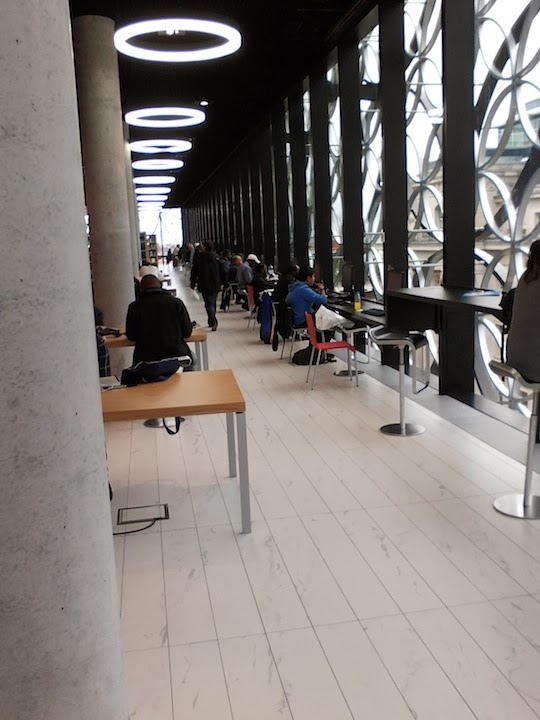
There is a nice roof garden with good views of central Birmingham. However, since Birmingham is one of the most hideous cities in the UK this is not as delightful as it might sound.
Which are the really dangerous drugs?
The Science and Technology Committee of the UK Parliament commissioned an assessment of legal and illegal stimulants using scientific evidence to determine which are the most harmful. In addition, they took evidence from expert witnesses. This was all done as part of a study of the use of scientific evidence in the UK government’s decision making. The Committee have published their findings.
In the UK class A drugs carry higher penalties than those in classes B and C. some drugs, including alcohol and tobacco, are unclassified and do not carry any legal penalties.
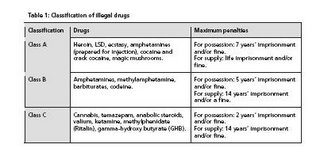
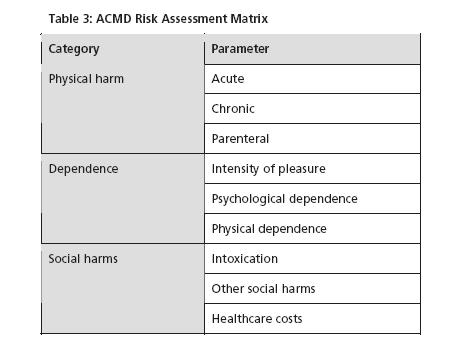
The scientific study assessed the drugs according to the following criteria.
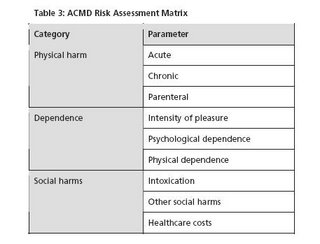
They then produced this table.
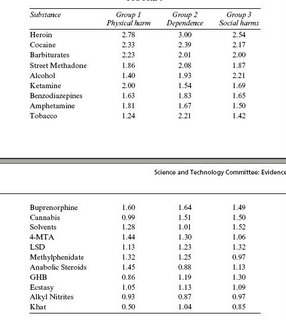
I took this data and entered it in a spreadsheet to produce this chart. The higher the score the more harmful the drugs.
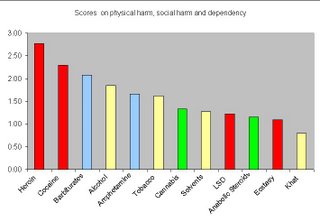
Red = a class A drug
Blue = a class B drug
Green = a class C drug
Yellow = an unclassified drug
If the study has classified the drugs correctly this suggest that both alcohol and tobacco should be class B drugs, LSD should be a class C drug rather than being in class A, and ecstasy should be unclassified. The current classification of ecstasy as a class A drug may seem strange given what is known of its effects. However, drug policy in the UK is largely made by the tabloid newspapers and the classification of ecstasy is largely a result of the tabloid frenzy over the Leah Betts case.
A chart based on such a reclassification might look like this -
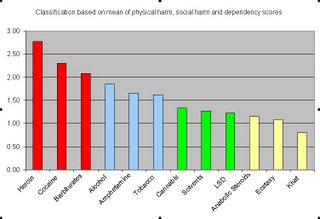
That would be that the possession of alcohol or tobacco would carry a sentence of up to five years imprisonment [or a fine], and supply of either of these drugs would carry a sentence of up to fourteen years imprisonment [or a fine].
You could argue that drug policy should only concern itself with social harm since that represents the cost to society of drug use. The degree of physical harm or addiction inflicted by a drug might be considered solely a matter for the user, and no concern of society.
The next chart shows the reclassification of drugs based solely on social harm.
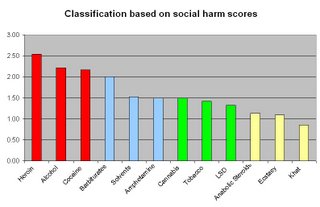
Alcohol has now become a class A drug, less harmful than heroin but more harmful than cocaine. Tobacco has become a class C drug [I suppose because of the secondary smoking effects].
In the UK class A drugs carry higher penalties than those in classes B and C. some drugs, including alcohol and tobacco, are unclassified and do not carry any legal penalties.
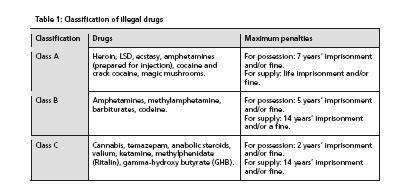
The scientific study assessed the drugs according to the following criteria.
They then produced this table.
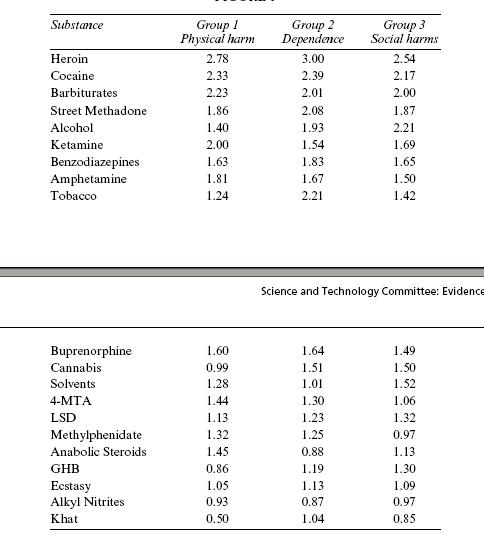
I took this data and entered it in a spreadsheet to produce this chart. The higher the score the more harmful the drugs.
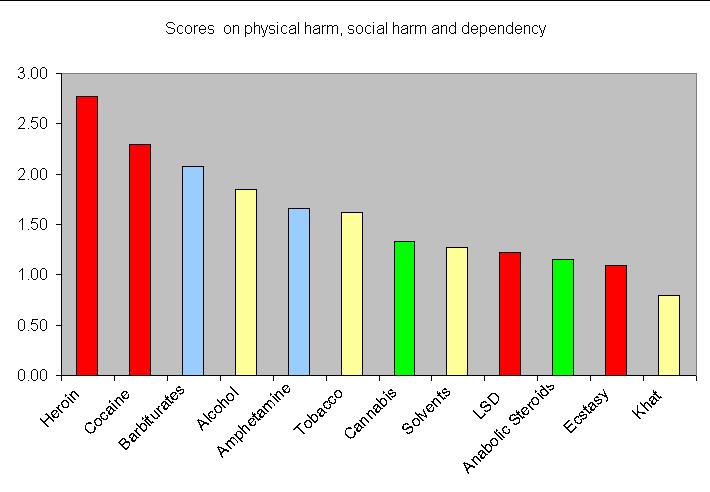
Red = a class A drug
Blue = a class B drug
Green = a class C drug
Yellow = an unclassified drug
If the study has classified the drugs correctly this suggest that both alcohol and tobacco should be class B drugs, LSD should be a class C drug rather than being in class A, and ecstasy should be unclassified. The current classification of ecstasy as a class A drug may seem strange given what is known of its effects. However, drug policy in the UK is largely made by the tabloid newspapers and the classification of ecstasy is largely a result of the tabloid frenzy over the Leah Betts case.
A chart based on such a reclassification might look like this -
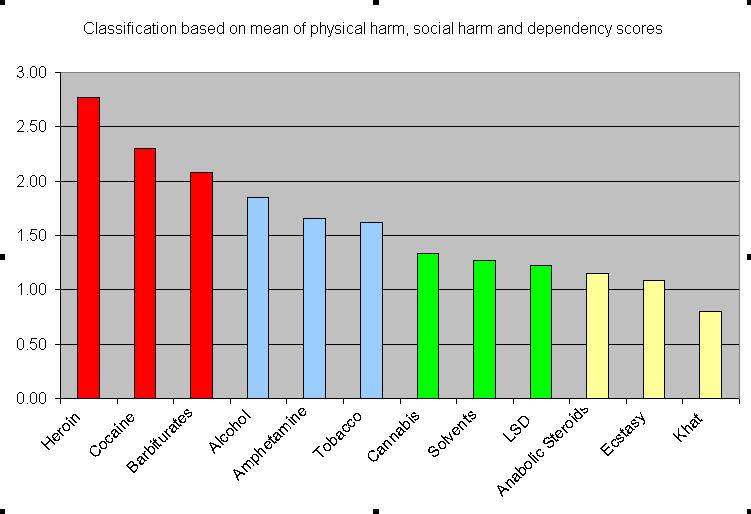
That would be that the possession of alcohol or tobacco would carry a sentence of up to five years imprisonment [or a fine], and supply of either of these drugs would carry a sentence of up to fourteen years imprisonment [or a fine].
You could argue that drug policy should only concern itself with social harm since that represents the cost to society of drug use. The degree of physical harm or addiction inflicted by a drug might be considered solely a matter for the user, and no concern of society.
The next chart shows the reclassification of drugs based solely on social harm.

Alcohol has now become a class A drug, less harmful than heroin but more harmful than cocaine. Tobacco has become a class C drug [I suppose because of the secondary smoking effects].
Churnalism
Is your UK newspaper [print or online] producing original journalism or just recycling content from other sources?
Churnalism.com will tell you.

Churnalism.com will tell you.

Square Leg

During the Cold War the possibility of a nuclear attack on Britain was very real.
In 1980 the British Government ran a civil defence exercise called Square Leg. It was based on their best guess as to what would happen in a nuclear war and it assumed that in a Soviet attack 150 nuclear weapons, totaling 280 megatons, would fall on Britain. It was estimated that this would kill 29 million people and seriously injure 7 million.
In 1981 the Campaign for Nuclear Disarmament published a map based on the Square Leg scenario.

This map identifies military bases [many of them American], secret bunkers and probable targets. The pink shading show areas likely to be contaminated by radiation.

On this map you can clearly see the secret government bunkers at Portland, Kidderminster, Cambridge and the really big one at Corsham Quarry.


Scotland had its share of prime nuclear targets. The map below shows mushroom clouds over the nuclear weapons store at Glen Douglas and the nuclear submarine base at Faslane. At the time the US Navy used to base Polaris missile submarines at Holy Loch so that would also have been a target. After they had been attacked and bombs dropped in the Clyde to catch fleeing missile boats there would not have been many people left alive in Glasgow.
There were secret government bunkers at Barnton Quarry [regional seat of government for Scotland, Kirknewton and Anstruther [now open to the public and worth a visit]. The people who drew the map didn't know about all the government hidey holes. Some only emerged years after the end of the cold war. There is a full list of bunkers here.

The Cuban missile crisis brought us very close to the Square Leg scenario and several instances when a nuclear war almost started by accident. Despite attempts to promote fear of terrorism we now live in a far safer world than we have done for fifty years.

General Jumbo
General Jumbo was a comic strip character in a in the UK comic The Beano. He was a twelve year old boy who commanded a remotely controlled model army, created for him by Professor Carter. Jumbo uses his army for crime fighting and adventuring.

Jumbo made his first appearance in 1953 and continued until 1998. At first he was drawn by Paddy Brennan, a freelance Irish artist. The strips are well drawn but Brennan drew Jumbo with an unfortunate facial expression. Later artists did better. There is an archive of General Jumbo strips here.

This strip was one of my favourites but I had completely forgotten about it until reminded recently by this knowledgeable site.
Some people have pointed out the similarities between the General Jumbo strip and the more recent 'Top 10' DC comic strip in which Police Officer Robyn "Toybox" Slinger carries a box filled with robotic toys built by her father.

General Jumbo was a children's comic strip My other favourite from back in the day was Jeff Hawke, a comic strip for adults which appeared in the UK's Daily Express newspaper. I had forgotten about both but if you sit long enough by the banks of the Internet everything eventually floats by.

Jumbo made his first appearance in 1953 and continued until 1998. At first he was drawn by Paddy Brennan, a freelance Irish artist. The strips are well drawn but Brennan drew Jumbo with an unfortunate facial expression. Later artists did better. There is an archive of General Jumbo strips here.

This strip was one of my favourites but I had completely forgotten about it until reminded recently by this knowledgeable site.
Some people have pointed out the similarities between the General Jumbo strip and the more recent 'Top 10' DC comic strip in which Police Officer Robyn "Toybox" Slinger carries a box filled with robotic toys built by her father.

General Jumbo was a children's comic strip My other favourite from back in the day was Jeff Hawke, a comic strip for adults which appeared in the UK's Daily Express newspaper. I had forgotten about both but if you sit long enough by the banks of the Internet everything eventually floats by.
Saying it with animals
I posted about Deacon McDonalds Dog some time ago. Recently I found another example of someone using a stone animal to insult an opponent.
The Riga Cats
A Latvian businessman was insulted when he was refused membership of a Guild. Unfortunately for the Guild he owned the building across from the Guild's headquarters. The businessman had two cat sculptures created and set them up on the roof of his building, with their behinds turned towards the Guild's HQ.


The Guild was incensed and tried legal means to have them removed. When their efforts failed they had to offer membership to their opponent.
Link
Deacon McDonalds Dog
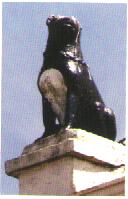
The historic market town of Irnbru is in the Scottish Borders. In Irnbru in the 1840s there was ill feeling between Deacon McDonald and a Miss Inglis who lived just across the way in Vere House. One day, Deacon MacDonald’s dog was poisoned and he suspected that it was Miss Inglis who had done the evil deed.
The traditional Scottish way of resolving such neighbourhood disputes is for the aggrieved party to carefully place half of an house brick in a sock and then sally forth to remonstrate with the offending party.
Deacon McDonald chose a less direct, but more effective, form of revenge. He commissioned a local stonemason to cut a life sized stone replica of the dead dog and paint it, then place it on the Deacons roof, with its head tilted reprovingly towards the house of Miss Inglis.
Of course, the reason for the statue was soon known throughout the town; especially amongst its more than ample supply of gossiping old biddies of both sexes. I would imagine that they made sure that Miss Inglis’ life was not much fun after that.
The Riga Cats
A Latvian businessman was insulted when he was refused membership of a Guild. Unfortunately for the Guild he owned the building across from the Guild's headquarters. The businessman had two cat sculptures created and set them up on the roof of his building, with their behinds turned towards the Guild's HQ.


The Guild was incensed and tried legal means to have them removed. When their efforts failed they had to offer membership to their opponent.
Link
Deacon McDonalds Dog
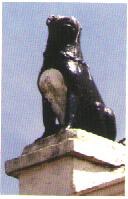
The historic market town of Irnbru is in the Scottish Borders. In Irnbru in the 1840s there was ill feeling between Deacon McDonald and a Miss Inglis who lived just across the way in Vere House. One day, Deacon MacDonald’s dog was poisoned and he suspected that it was Miss Inglis who had done the evil deed.
The traditional Scottish way of resolving such neighbourhood disputes is for the aggrieved party to carefully place half of an house brick in a sock and then sally forth to remonstrate with the offending party.
Deacon McDonald chose a less direct, but more effective, form of revenge. He commissioned a local stonemason to cut a life sized stone replica of the dead dog and paint it, then place it on the Deacons roof, with its head tilted reprovingly towards the house of Miss Inglis.
Of course, the reason for the statue was soon known throughout the town; especially amongst its more than ample supply of gossiping old biddies of both sexes. I would imagine that they made sure that Miss Inglis’ life was not much fun after that.
The Voice of the Sluggard
Feeling a little sluggish after the festive season? There is a song for you if the condition persists.
The Sluggard
'Tis the voice of the sluggard; I heard him complain,
"You have waked me too soon, I must slumber again."
As the door on its hinges, so he on his bed,
Turns his sides and his shoulders and his heavy head.
"A little more sleep, and a little more slumber;"
Thus he wastes half his days, and his hours without number,
And when he gets up, he sits folding his hands,
Or walks about sauntering, or trifling he stands.
I pass'd by his garden, and saw the wild brier,
The thorn and the thistle grow broader and higher;
The clothes that hang on him are turning to rags;
And his money still wastes till he starves or he begs.
I made him a visit, still hoping to find
That he took better care for improving his mind:
He told me his dreams, talked of eating and drinking;
But scarce reads his Bible, and never loves thinking.
Said I then to my heart, "Here's a lesson for me,"
This man's but a picture of what I might be:
But thanks to my friends for their care in my breeding,
Who taught me betimes to love working and reading.
The above poem was written by Isaac Watts, who sounds like an American blues singer, but was actually an English nonconformist [1674 – 1748].
The lines can also be set to music and sung. 'The Voice of the Sluggard' was a favourite of Dickens. He used to accompany himself on an accordion. I have heard it on the BBC sung by Hugh Summers of Portsmouth Cathedral Choir but I cannot find a copy on iTunes or Amazon.
The Voice of the Lobster
'Tis the Voice of the Lobster' was Carroll's parody of 'The Sluggard' and appeared in 'Alice's Adventures in Wonderland'.
'Tis the voice of the Lobster: I heard him declare
"You have baked me too brown, I must sugar my hair."
As a duck with its eyelids, so he with his nose
Trims his belt and his buttons, and turns out his toes.
When the sands are all dry, he is gay as a lark,
And will talk in contemptuous tones of the Shark;
But, when the tide rises and sharks are around,
His voice has a timid and tremulous sound.
I particularly like these lines. Don't we all know someone like the lobster?
When the sands are all dry, he is gay as a lark,
And will talk in contemptuous tones of the Shark;
But, when the tide rises and sharks are around,
His voice has a timid and tremulous sound.
Lewis Carroll loved to parody Watts. He did it with 'Against Idleness and Mischief' which became 'How Doth the Little Crocodile'. The busy and virtuous bee in Watt's poem becomes a sly and predatory crocodile in Carroll's parody.
The Sluggard
'Tis the voice of the sluggard; I heard him complain,
"You have waked me too soon, I must slumber again."
As the door on its hinges, so he on his bed,
Turns his sides and his shoulders and his heavy head.
"A little more sleep, and a little more slumber;"
Thus he wastes half his days, and his hours without number,
And when he gets up, he sits folding his hands,
Or walks about sauntering, or trifling he stands.
I pass'd by his garden, and saw the wild brier,
The thorn and the thistle grow broader and higher;
The clothes that hang on him are turning to rags;
And his money still wastes till he starves or he begs.
I made him a visit, still hoping to find
That he took better care for improving his mind:
He told me his dreams, talked of eating and drinking;
But scarce reads his Bible, and never loves thinking.
Said I then to my heart, "Here's a lesson for me,"
This man's but a picture of what I might be:
But thanks to my friends for their care in my breeding,
Who taught me betimes to love working and reading.
The above poem was written by Isaac Watts, who sounds like an American blues singer, but was actually an English nonconformist [1674 – 1748].
The lines can also be set to music and sung. 'The Voice of the Sluggard' was a favourite of Dickens. He used to accompany himself on an accordion. I have heard it on the BBC sung by Hugh Summers of Portsmouth Cathedral Choir but I cannot find a copy on iTunes or Amazon.
The Voice of the Lobster
'Tis the Voice of the Lobster' was Carroll's parody of 'The Sluggard' and appeared in 'Alice's Adventures in Wonderland'.
'Tis the voice of the Lobster: I heard him declare
"You have baked me too brown, I must sugar my hair."
As a duck with its eyelids, so he with his nose
Trims his belt and his buttons, and turns out his toes.
When the sands are all dry, he is gay as a lark,
And will talk in contemptuous tones of the Shark;
But, when the tide rises and sharks are around,
His voice has a timid and tremulous sound.
I particularly like these lines. Don't we all know someone like the lobster?
When the sands are all dry, he is gay as a lark,
And will talk in contemptuous tones of the Shark;
But, when the tide rises and sharks are around,
His voice has a timid and tremulous sound.
Lewis Carroll loved to parody Watts. He did it with 'Against Idleness and Mischief' which became 'How Doth the Little Crocodile'. The busy and virtuous bee in Watt's poem becomes a sly and predatory crocodile in Carroll's parody.
Teach Yersen Scots - Dreich

I first moved to Pollack Mansions on a New Years Day many years ago and it was 17 degrees Fahrenheit below zero, with icicles six feet long on the river below and seven burst water pipes. Thanks to global warming I thought that winters like that had gone. We used to go sledging in the village square but snow seemed to be a thing of the past. Instead we have had lots of dreich winters.
Subscribe to:
Posts (Atom)